Biography
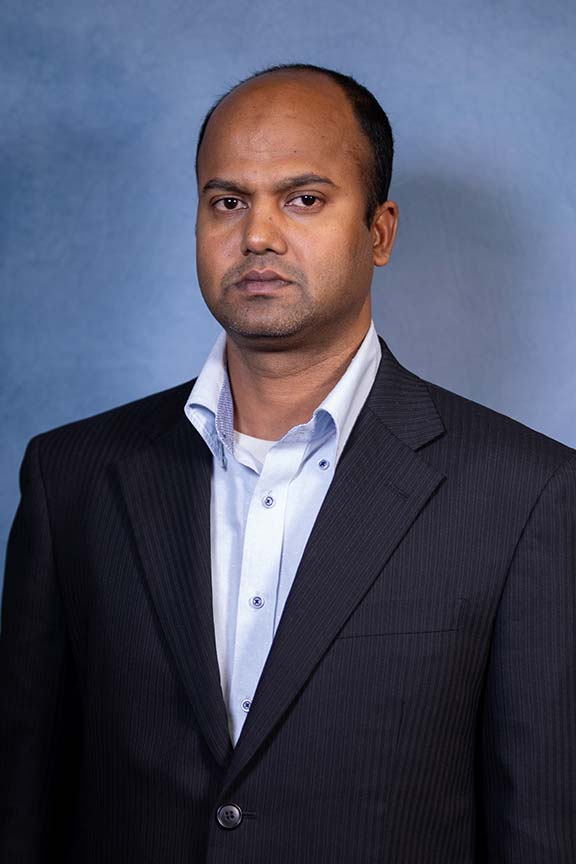
Dr. K. M. Ibrahim Khalilullah is currently serving as a Lecturer in the Department of CSIT at Clayton State University, USA. Previously, he worked as a Research Instructor (Affiliated Status) and Postdoctoral Research Associate at the TReNDS center, a joint initiative of Georgia State University, Georgia Institute of Technology, and Emory University. He also held Lecturer and Assistant Professor positions at private universities in Bangladesh. Dr. Khalilullah earned his bachelor’s and master’s degrees in computer science and engineering. He completed his Ph.D. in Intelligent Systems at the University of Toyama, Japan, under the prestigious MEXT (Monbukagakusho) Scholarship awarded by the Government of Japan. With over a decade of academic and industry experience, his work spans artificial intelligence, neuroimaging, robotics, and agricultural automation. He previously served as an AI Researcher at SkymatiX Inc. in Tokyo, Japan, developing deep learning and computer vision solutions for precision agriculture. He has published numerous peer-reviewed articles, reviewed for major conferences, supervised research projects, and collaborated on international multidisciplinary initiatives.
Education
Ph D, Intelligence System Under Advanced Mathematics and Human Mechanisms Program, University of Toyama, Japan, 2019
MS, Computer Science and Engineering, University of Rajshahi, Bangladesh, 2010
BS, Computer Science and Engineering, University of Rajshahi, Bangladesh, 2008
Awards and Honors
Research Assistantship (Outstanding Performance Category), University of Toyama, Japan., Award, 2016
Student Awards, University of Rajshahi, Bangladesh, Award, 2008
Intellectual Contributions
K M Ibrahim Khalilullah, Oktay Agcaoglu, J. Sui, T. Adali, Marlena Duda, Vince Calhoun, Parallel Multilink Group Joint ICA: Fusion of 3D Structural and 4D Functional Data Across Multiple Resting fMRI Networks
K M Ibrahim Khalilullah, Oktay Agcaoglu, J Sui, Tuly Adali, marlena Duda, Vince Calhoun, Multimodal fusion of multiple rest fMRI networks and MRI gray matter via parallel multilink joint ICA reveals highly significant function/structure coupling in Alzheimer's disease 2023
K M Ibrahim Khalilullah, Oktay Agcaoglu, Jing Sui, Marlena Duda, Tuly Adali, Vince Calhoun, Alternating learning paradigm for multimodal fusion of differently distributed data via jICA 2023
K M Ibrahim Khalilullah, Oktay Agcaoglu, Jing Sui, Marlena Duda, Tuly Adali, Vince Calhoun, Parallel Multilink Joint ICA for Multimodal Fusion of Gray Matter and Multiple Resting fMRI Networks 2024
K M Ibrahim Khalilullah, Shunsuke Ota, Toshiyuki Yasuda, Mitsuru Jindai, Wheelchair Robot Navigation in Different Weather Conditions Using Deep learning and Evolved Neural Controller 2019
Contracts, Grants, and Sponsored Research
K M Ibrahim Khalilullah, Muhammad Rahman, A Pilot Study on Coherent Multimodal Patterns of EEG Activity and Gray Matter Structure in Alzheimer’s Disease, Clayton State University 2025 to 2026
K M Ibrahim Khalilullah, Mitsuru Jindai, Wheelchair Robot System Based on Drivable Road Detection Using Genetic Algorithm and Deep Learning, Other 2015 to 2019
Service to the University & University System of Georgia
College, Undergraduate Student Award Committee, Committee Member – 2025 to Present
Department, CSIT Curriculum Committee, Attendee, Meeting – 2025 to Present
Service to the Profession
Member, Faculty Affiliate, Applied AI Institute, CSU 2025 to Present
Teaching Interest
Dr. Khalilullah’s teaching interests lie in the field of applied computer science and information technology, with a focus on helping students build strong analytical, computational, and problem-solving skills. He aims to create an active learning environment where students engage through hands-on exploration, collaborative exercises, and real-world applications. He emphasizes critical thinking, algorithmic reasoning, and the ability to translate concepts into practical solutions. A central part of his teaching interest is integrating research-inspired learning, where classroom topics connect to current developments in AI, data science, and emerging technologies. He actively encourages students to participate in inquiry-based activities, mini-projects, and early-stage research experiences that spark curiosity and confidence. His approach includes inclusive pedagogy, scaffolding complex ideas, and providing timely feedback to support continuous growth. He is deeply committed to teaching, mentoring, and preparing students to succeed in interdisciplinary computing fields. Ultimately, his goal is to empower students to become innovative thinkers who can apply computing knowledge to address real-world challenges across disciplines.
Research Interest
Dr. Khalilullah’s research interests focus on applied artificial intelligence in healthcare, assistive and rescue robotics, and the advancement of AGI-driven intelligent systems. His current work includes multimodal brain imaging fusion, interpretable machine learning for clinical neuroscience, and generative AI for biomarker discovery, alongside applied AI for assistive and rescue robotics. He is interested in working in multidisciplinary domains to explore innovative AI applications, including:
- Biomedical signal and data analysis using machine learning to uncover patterns relevant to brain health and clinical decision support.
- Agentic AI and large language models (LLMs) for autonomous reasoning, intelligent interaction, and knowledge representation.
- Explainable and interpretable AI to enhance transparency, trust, and accountability in high-stakes decision-making.
- Statistical machine learning for robust, generalizable modeling in complex domains.
- Computer vision with deep learning for perception, recognition, and real-time understanding in healthcare and robotics.
- Scalable data science and multimodal data fusion, integrating imaging, signals, and behavioral data to build comprehensive and actionable AI-driven systems.
- Federated and privacy-preserving machine learning frameworks for secure, collaborative model development across institutions.