Biography
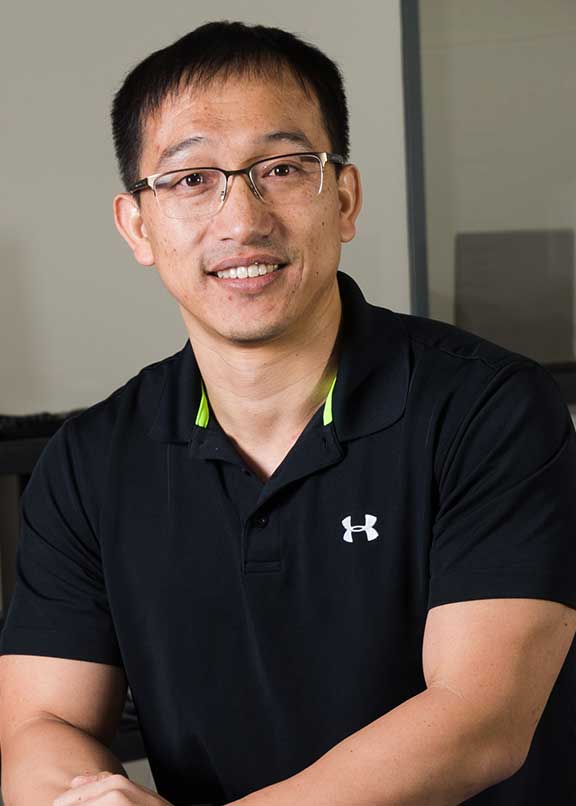
Hae Ryong “Harry” Chung, Ph.D., CSCS
Hae Ryong Chung is an Associate Professor in the Health and Fitness Management program. He holds a Ph.D. in Exercise Physiology from the University of Illinois at Urbana-Champaign. Before coming to the United States, he earned a Master’s degree in Exercise Physiology from Kookmin University and a Bachelor’s degree in Chemistry from Chungnam National University in his native South Korea.
Education
Ph D, Kinesiology, University of Illinois, 2014
MS, Exercise Science, Kookmin University, 2005
BS, Chemistry, Chungnam National University, 2003
Awards and Honors
List of Instructors Listed as Excellent by their Students, University of Illinois , University of Illinois, Honor, 2013
Intellectual Contributions
HaeRyong Chung, M Vakil, M Munroe, A Parikh, M Meador, P Wu, J Jeong, J Woods, K Wilund, M Boppart, The impact of exercise on statin-associated skeletal muscle myopathy, PLoS ONE – 2016
P Wu, P Fitschen, P. Kistler, B. Jeong, HaeRyong Chung, M Aviram, S Phillips, B Fernhall, K Wilund, Effect of pomegranate extract supplementation on cardiovascular risk factors and physical function in hemodialysis patients, Journal of Medicine Food – 2015
K Wilund, J Jeong, B Kistler, P Fitschen, A Biruette, E Tomayko, HaeRyong Chung, S Phillips, B Fernhall, Efficacy of intradialytic oral protein supplementation and exercise training., European Renal Association/ European Dialysis Transplant Association. – 2016
HaeRyong Chung, The effect of cadence on muscular activity and performance during the push-up exercise
C Pitsikoulis, D Cesario, HaeRyong Chung, The effect of cadence on muscular activity and performance during the push-up exercise, MW ACSM Annual Meeting – 2016
Contracts, Grants, and Sponsored Research
Victoria Foster, Elciia Collins, Lisa Smiley, Kimberly Campbell, Naquilla Thomas, HaeRyong Chung, Terri Summers, Michelle Nelson, Angela Hollis, Shereda Taylor, Rebecca Morgan, Crystal Marchant, Tamika Baugh-Allen, Annette Crew-Gooden, Taking It To The Streets: Mobile Health Training, HRSA, Federal, 3256516, Not Funded – February 2022 to Present
Service to the University & University System of Georgia
Department, HFMG, Program Coordinator – January 2019 to Present
College, Undergraduate Curriculum, Committee Member – August 2016 to Present
University, Student Affairs, Committee Member – August 2016 to Present
University, Wellness Council, Committee Member – August 2020 to Present
Teaching Interest
Most of his teaching experience is in Exercise Physiology, though he has also taught activity classes in weight control and conditioning, weight training, snowboarding, and swimming. Outside of the classroom, he has taught several martial arts classes, including Kung Fu, Aikido, Kickboxing, and self-defense. He has a wide range of experience in the health and fitness industry, including personal and group training, gym management, and clinical exercise prescription. In terms of community-based classes, he has been coordinating the Lifetime Fitness Program at U of I, a long-running physical activity program for older adults.
Health and Fitness Management, College of Health, Clayton State University – Survey-Health & Fitness Professions (HFMG 1101), Kinesiology (HFMG 3101), Principles of Fitness (HFMG 3130), Exercise Physiology (HFMG 3102), Personal Health and Wellness (HFMG3110), Injury Prevention and Rehabilitation (HFMG 3121), Substance Use in Health and Fitness (HFMG 3382), Personal Nutrition for Health (HFMG 4060), Exercise Testing and Prescription (HFMG 3140), Internship (HFMG 4970), and Capstone (HFMG 4999), Medical Terminology (HCMG 2100)
Research Interest
His PhD research included two distinct areas: clinical research with dialysis patients and laboratory work with animal models. His clinical research focused on dialysis patients with end-stage kidney disease, specifically on exercise and nutrition interventions to improve their health and quality of life. His other areas of study, which were the focus of his dissertation, involve animal models. He is particularly interested in the side effects of medications commonly used to treat high cholesterol. The common thread in these two areas is trying to work out how exercise can best be used to manage disease states and improve quality of life.